
REALITY
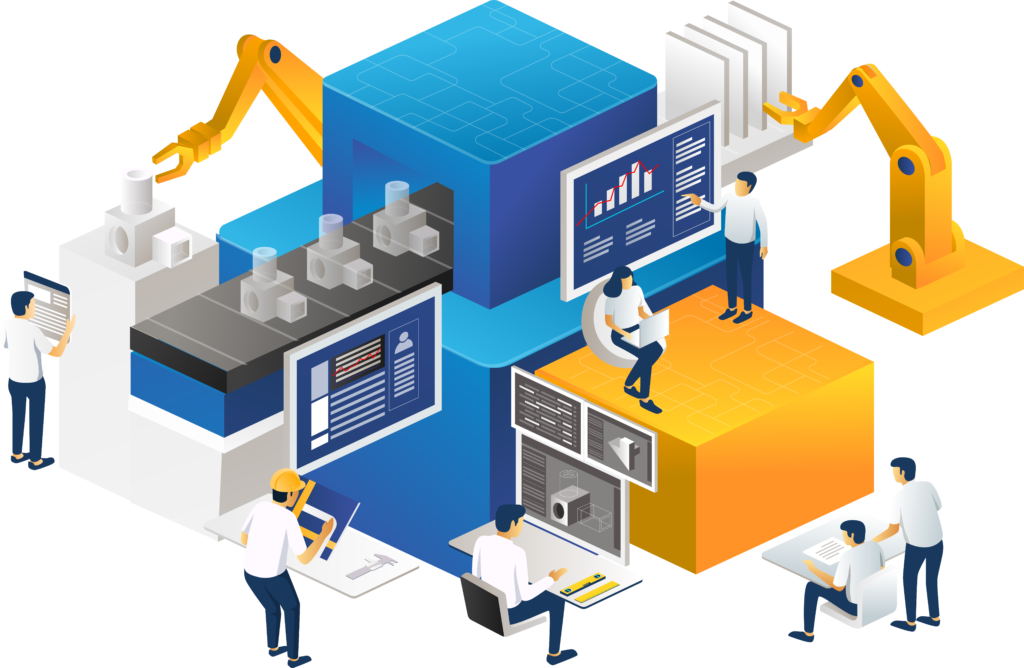
PICTURED HERE:
Historically, U.S. factories have been remembered as dark, loud factory floors with grimy machinery, physical strain, and real risks to human safety. While the incorporation of modern technology, robotics, and more stringent operational safety standards have all but eliminated these conditions, the stigma around U.S. manufacturing has been harder to dispel — leading new generations of talented workers to overlook advanced manufacturing as a career path.
A related misconception is equally common: that younger workers either simply do not know what advanced manufacturing is at all or imagine it as little more than consumer products rolling off a conveyor belt. This is precisely the gap that Manufacturing USA institutes actively address through education and workforce development outreach — from middle school through undergraduate programs.
Today’s American factories and production facilities are a far cry from the workplaces often associated with manufacturing decades ago. Modern manufacturing environments are increasingly clean, high-tech, safe, and driven by advanced technologies such as robotics, automation, artificial intelligence, and digital systems. These facilities rely on skilled workers — from technicians and engineers to programmers and data specialists — creating well-paying career pathways and opportunities for continuous learning and advancement. Manufacturing has evolved into an innovation-driven sector that offers dynamic careers while playing a critical role in strengthening the nation’s economy, supply chains, and competitiveness.
The majority of U.S. manufacturing facilities today already have climate-controlled environments, collaborative robots working alongside humans, digital control panels, augmented reality tools, and safety standards that rival a hospital operating room. This is not a future vision — it is the current reality of advanced manufacturing in America.
This transformation is the product of deliberate investment in technology that shifts the human role from physical execution to technical oversight — from lifting to programming, from operating to optimizing.
Advanced manufacturing technologies — robotics, AI-driven quality inspection, smart sensors, and digital twin simulation — have fundamentally changed what the work looks like. A technician at a modern facility might spend their day:
Manufacturing USA institutes are at the forefront of this shift. The ARM Institute (Pittsburgh, PA) has deployed AI-driven robotic quality inspection systems now running across 12 Stellantis manufacturing plants. MxD (Chicago, IL) operates a 22,000 sq ft digital manufacturing floor where the factory of the future is built and tested today. CyManII (San Antonio, TX) has opened a 17,000 sq ft national testbed specifically designed to make manufacturing environments more secure and resilient. AIM Photonics operates out of the shared semiconductor foundry of the Albany NanoTech Complex (ANC) and the Test, Assembly and Packaging (TAP) – the first open access facility focused on advanced photonic packaging and PIC prototyping. LIFT (Detroit, MI) houses a 100,000 square foot high bay, including the LIFT Learning Lab, which acts as both a “showcase and sandbox” where its experts solve today’s advanced materials and manufacturing process challenges, its member highlight the future of a connected advanced manufacturing floor, and educates the next generation of the advanced manufacturing workforce.
Perception is a workforce pipeline problem. When people imagine manufacturing careers through the lens of 1970s steel mills or auto plants, the pipeline empties. Correcting this perception isn’t just about fairness to the industry. It’s about national security and economic competitiveness. The U.S. cannot reshore critical supply chains without the workforce to staff them.
The good news: the real story is a compelling one. Advanced manufacturing careers offer meaningful technical work, strong wages, and clear advancement pathways — in facilities that look nothing like the stereotype from several decades ago.