
REALITY

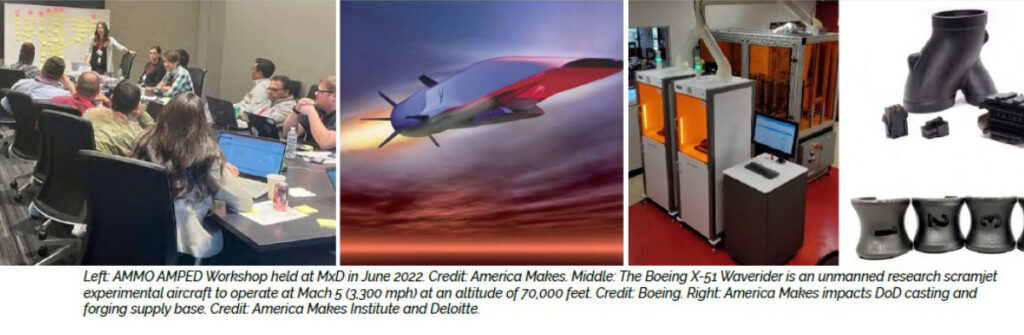
PICTURED HERE:
Innovation lives in universities, research labs, and technology companies. Manufacturing is the downstream activity — execution, not invention. The creative, high-value intellectual work happens before the factory floor. This framing has shaped funding decisions, career choices, and policy priorities for decades.
This framing misconstrues where American innovation stalls — and why. The United States has consistently led the world in basic applied research. The persistent challenge is the “valley of death” between laboratory discovery and commercial production: the gap at Technology Readiness Levels 4 through 7, where promising technologies fail to scale because no single company can shoulder the technical risk and capital cost of figuring out how to manufacture on their own.
Manufacturing is innovation. Process innovation — discovering how to make something at speed, scale, cost, and quality — is as technically demanding as any laboratory breakthrough. It is also where the economic and national security value of research is ultimately realized. A technological concept that cannot be manufactured is a technology that cannot create jobs, secure supply chains, or defend the nation.
Manufacturing USA institutes are explicitly designed to bridge the valley of death. Each institute operates at the intersection of applied research and production-readiness to bring products to market:
Manufacturing accounts for 54% of U.S. private sector R&D investment — making it the single largest driver of American industrial research, ahead of software, pharmaceuticals, and every other sector. The Manufacturing USA network’s 929 active R&D projects in FY2023, with 85% meeting their key technical objectives, represent an innovation pipeline operating at national scale.
What distinguishes this pipeline is that it does not stop at discovery. The explicit goal of every Manufacturing USA Institute is to get innovations from the lab to the production floor — in America. What is invented here should also be made here.